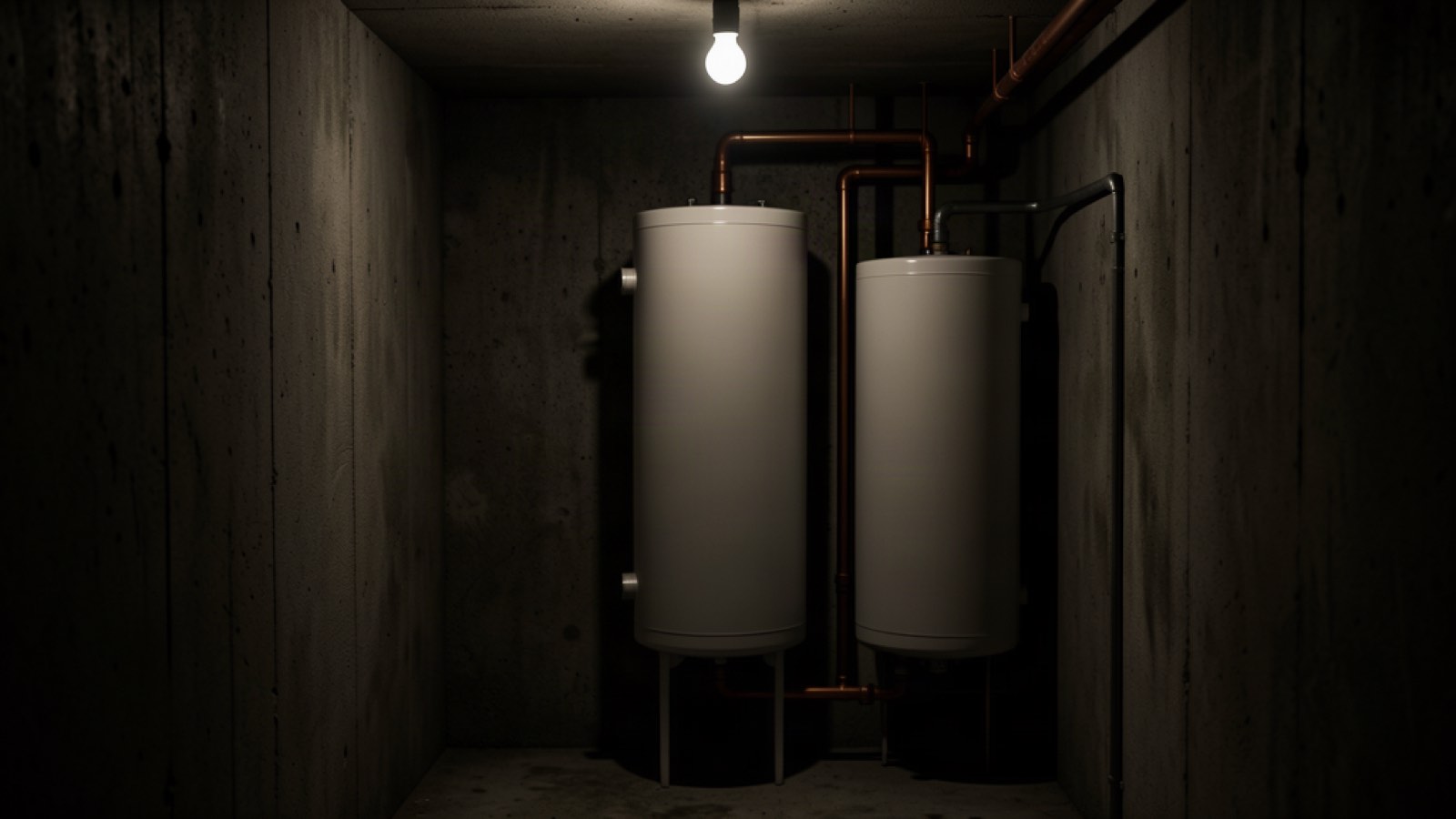
“I feel like I have very little visibility into my rentals other than knowing how much I spent each year and it feels like I’m losing money somewhere. I have invoices, repair records, etc organized in my Google drive but it’s annoying trying to look through them all. I don’t really have a good way to track the age and condition of major things like furnaces, water heaters, roofs, etc. I think I would want to know what might need replacing soon.”
That was posted on r/RealEstateTechnology this week by a small landlord with a handful of rentals and, by his own description, the paperwork to prove it.
Read it twice. He is not saying he lost the records. He is saying he has them, they are organized, and he still cannot see his own buildings. That is a different problem than missing data, and it is the more expensive one, because nothing looks broken while it is happening.
You are not losing money somewhere
Every owner I have ever talked to says some version of that sentence. Losing money somewhere. The word doing all the work is somewhere, because it means the loss is real and the location is unknown.
Here is the honest version: you are not losing it in repairs. You are losing it in the gap between what you spent and what you know about what you own. Repairs are loud, they arrive as invoices, you pay them. The information in them is silent. Three invoices from the same plumber spread over three years look like three separate accidents until you put them side by side and see one water heater dying slowly.
A folder of receipts can tell you exactly what you have already paid. It cannot tell you what you are about to pay. Those are two different documents, and owners almost always have the first one.
The questions a folder cannot answer
An owner with twelve rentals does not need another spreadsheet. He needs four questions answered, and every one of them fails at the same point:
- What is going to need replacing in the next twelve months, and what will it cost in the worst month? Your invoices only run backwards.
- Which property is actually eating money? Annual totals hide the pattern. One building with three repairs a year is invisible when it is added into a number that includes eleven others.
- Is this normal, or is this the third water heater in four years? Nothing in a folder compares one replacement to the previous one.
- What did we pay last time, and who did it? Answerable, in about nine minutes of scrolling, which is why the answer is usually “just call whoever”.
Not one of those is a data problem. The data is sitting in your Drive. It is a shape problem: invoices arrive as a pile, and a pile cannot answer a question about time.
The replacement clock nobody keeps
Most of the things that hurt in a rental have a known, boring service life. Not a promise, a range, the same way a car has a range. Here is what a portfolio looks like when you finally lay it out, and what most owners actually have on file for each line:
| Asset | Typical service life | What your folder usually holds | What it costs when it fails in January |
|---|---|---|---|
| Roof, asphalt shingle | 20 to 30 years | the last patch invoice | tarp, a roofer three weeks out, a tenant with a bucket |
| Water heater | 8 to 12 years | one installer receipt, undated | no hot water, emergency rate, a hotel night if you are decent |
| Furnace or AC | 15 to 20 years | nothing, usually | a no-heat notice and a weekend premium |
| Fridge and range | 10 to 15 years | the model number, if you are lucky | a tenant buys their own and takes it with them |
| Exterior paint and caulking | 6 to 10 years | nothing | water getting in, which you meet as a rot repair two years later |
| Sump pump, well pump, softener | 8 to 12 years | nothing | water in a basement on a Sunday |
Read the third column again. For most of the things on your own list there is no record at all, and the records you do have are receipts for money that is already gone. The fourth column is the one that decides whether an owner feels in control of a portfolio or at the mercy of it.
An invoice is a receipt, not a record
Here is a real pattern, dates and amounts changed, that I have seen on more than one property:
14 Mar 2023   City Plumbing    $840    water heater, 42 gal, installed
02 Nov 2023   City Plumbing    $310    same unit, thermostat and element
19 Jun 2026   City Plumbing    $1,150  water heater, 40 gal, replaced
Everything you need is in those three lines. The unit was installed in March 2023 and replaced in June 2026, which means it lasted three years and three months against a range of eight to twelve. That is not a maintenance cost. That is a warranty conversation, a water-quality conversation, and possibly a different plumber conversation.
Nobody was ever going to have that conversation, because the three invoices live in three folders, one of them under the property address and two of them under the plumber’s name. The register already existed. It just was not written down anywhere.
A register is one page per property, one row per asset: what it is, when it went in, how old that makes it, the condition as last described by whoever stood in front of it, the replacement window, and who to call. That is all. It fits on a page. Owners do not have it, not because it is hard, but because building it is nobody’s job.
The same rot, in a different drawer
If that sounds familiar and you do not own rentals, it should. This is the identical disease as a CRM database that has rotted: the records exist, they are technically organized, and they cannot answer a single question you actually have, because nothing ever gave any record a next step. I wrote about that one separately, the four-question filter for a database cleanup, and landlords can run the same filter on a property folder tomorrow.
A record with no next step is not a record. It is a pile with better storage.
What the agent actually does
This is where an AI agent stops being a chatbot and becomes the thing that builds and keeps the page. For a landlord or a property manager:
- It reads what you already have. Invoices, repair records, warranty PDFs, the note you emailed yourself at 11pm. It pulls out what was replaced, when, by whom, and for how much, then fills the register. You do not retype history.
- It gives every asset one home. The furnace belongs to the building, not to a folder named after a plumber, so the next invoice lands on the same page as the last one.
- It runs the clock. From the install date it found, it works out an age band and a replacement window per asset, and it says plainly when the date is a guess rather than pretending to know.
- It produces a next-twelve-months list per property, sorted by what is oldest and what is most expensive to lose in winter. That is the piece owners actually want and never have.
- It flags repeats. Same component three times in four years reads differently from a component that lasted fourteen, and the agent is the only thing in the stack that notices.
- It answers the question mid-call. Standing in a unit with a tenant, “when was this installed, and what did we pay last time?” gets an answer instead of a promise to check.
- It keeps a running record per property, which is also the report investor clients keep asking their agent for and nobody has the hours to build.
The same discipline matters on the other side of the business. A pipeline is only as good as the record behind it, which is why the Lead Generation Pack ($1,997 one-time) ships as a verified prospect list where every entry is one record per person, deduplicated before it reaches your file, with the source kept and the list yours forever. A clean register at the front of the business and a clean register inside the buildings are the same habit.
What it will not do
- It cannot inspect. It knows what your records say, not what a plumber finds when the panel comes off. It will hand you an age, a date and a source, and tell you when to call someone.
- It will not invent condition. If nothing in the file ever described the roof beyond “patched”, it says unknown instead of picking a number that looks confident.
- Service lives are ranges, not promises. A water heater can go at six years or at fifteen. Anyone who quotes you a single age is selling you a feeling.
- If the records were never kept, it starts the clock today, and it tells you which assets it started from zero so you know the difference between a measured line and a fresh one.
- It will not quote you a savings percentage. Your number depends on your buildings, your climate and your tenants, not on our software. I did not measure your portfolio and neither has anyone quoting a figure like that at you.
Where this fits in the stack
The Base Agent is $1,297 one-time, and that includes the Notion CRM and 30 days of support. The Text Receptionist is $297, the Voice Receptionist is $550, and Care & Maintenance is $97/mo if you want us keeping it running and tuned. The agent runs on your own server, the records stay yours, and you can export the register any time. It is a filing system that happens to answer questions, which is all any owner ever wanted from the pile.
You already have the history. You just cannot see it. Book the free 15-minute audit and bring one property. We will show you what your own records turn into.
Try it
Start with the free one. The Quick Log template is a plain one-page format for capturing a call, a repair or a decision in under a minute. It is free, it takes an email, and it is the smallest possible version of every register described above.
Then hear it work. The voice demo connects you to Elliot, our AI receptionist, in one click. No login, no form, no sales call. Ask him a question the way a tenant would and see how it gets handled.
Or message instead of calling. The WhatsApp agent is the live version we send people to when they want to poke at it. Ask it something awkward. It stays in character.
If the outreach side of your business needs the same treatment, the Outreach Engine ($797 one-time) runs follow-up off one clean record per person, so nothing gets chased twice and nothing gets forgotten.
The Product Behind This Article
Everything above is what this does in practice. Here is the product that does the work.