Somebody in r/RealEstateTechnology asked for something that sounds simple:
“Pull land development notices and updates from city, county, and state agencies… and put together a ‘Guess Who’s Coming Soon’ type of newsletter.”
It sounds simple because the information is public. It is not simple, and the reason is not that the records are hidden.
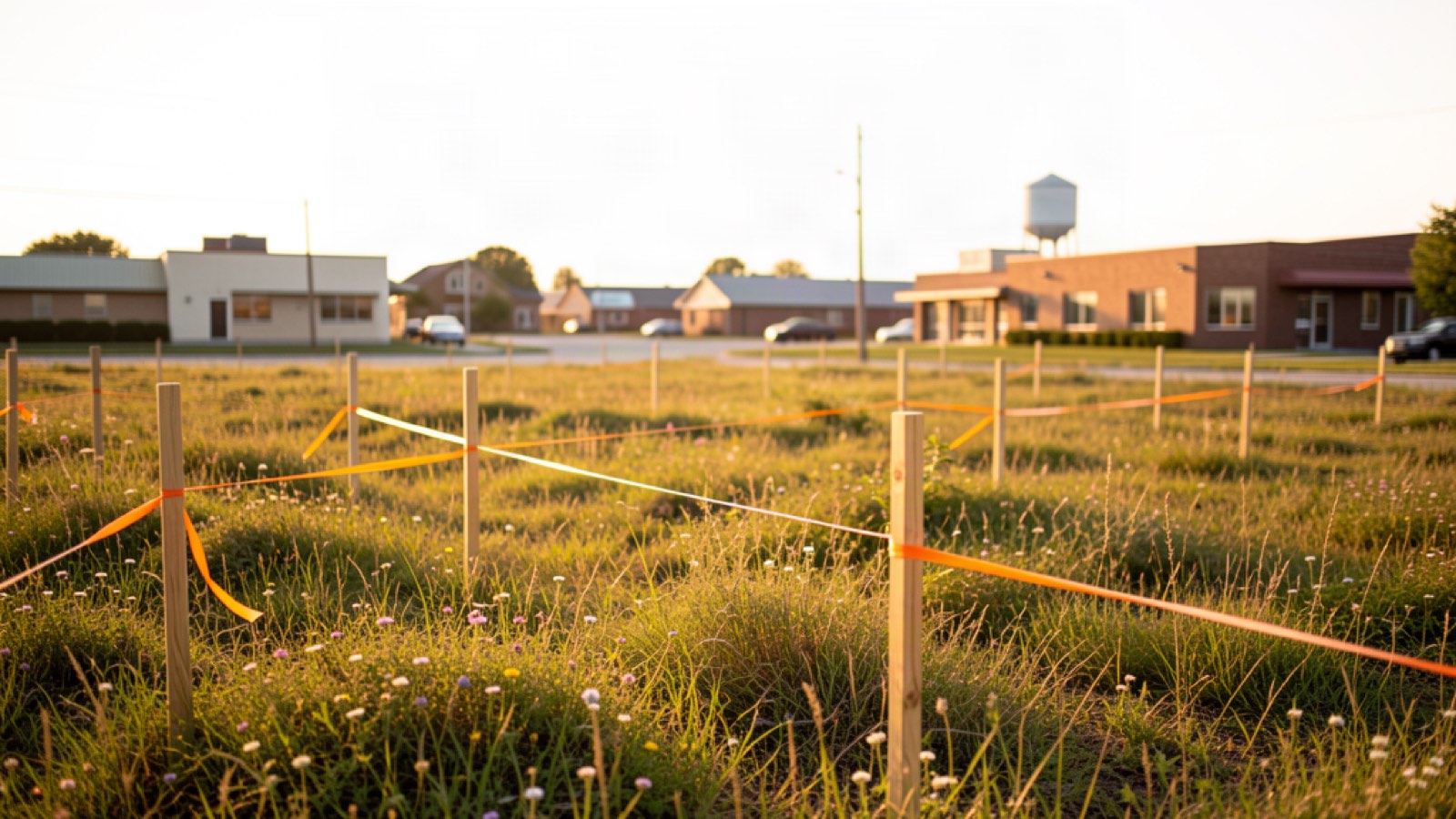
Every commercial deal in your market announces itself first, in writing, months before anyone thinks to call a broker. The announcement is filed with a city, a county or a state agency, it is a matter of public record, and almost nobody reads it. Not because agents are lazy. Because it is written in a dialect.
The record was never written for you
A planning notice is written to document that a process was followed. That is its job. So the language is procedural, not persuasive, and it reads like this:
Administrative site plan review, no public hearing required.
That sentence is accurate, forgettable, and one of the most valuable lines on the page if you happen to know what it means.
Here is the decoder.
| What the notice says | What it actually means | What it is worth to you |
|---|---|---|
| Administrative site plan review, no public hearing required | Somebody has already paid an architect and a civil engineer, and because no hearing is needed it will never reach the newspaper or your inbox | A funded project, three to nine months before construction |
| Rezoning request, residential to commercial | Whoever owns that land is betting it becomes commercial, and they are spending money to make that true | The earliest, least crowded conversation you will ever have about that parcel |
| Conditional use permit, drive-through | A chain is scouting the site and needs the city’s permission for its footprint | A tenant that has already decided what it wants |
| Variance, reduced parking or setback | The project does not fit the code as written, which usually means a tenant with specific needs | A design question being answered right now |
| Planned unit development, forty plus acres | A developer is optioning or buying a large piece and staging it in phases | Bigger and earlier than anything else on this list |
| Liquor license or business license application | The tenant has signed, or is about to, and the decision is already made | One step before the sign goes up, and the sign is when everyone else finds out |
Read the middle column again. Not one of those rows uses the word opportunity. Somebody filed each one because the law required them to. Nobody filed it for you.
The second problem is not the language, it is the reading
Even with the decoder in hand, the notices are not in one place.
A city planning portal. A county commission agenda. A board of adjustment calendar. A state agency feed. Meeting minutes published as a scanned PDF three weeks after the meeting. A license register that updates on Tuesdays. They are separate systems, run by separate departments, published on separate schedules, and none of them know the others exist.
The complaint in that Reddit thread about not having good data sources for property analysis is really this: the data is not missing, the reading is. The information is available, and collecting it costs one step per source, forever.
Do the arithmetic honestly. Ten to twenty feeds, once a week, five to ten minutes each. That is a couple of hours. Two hours on its own is nothing. Two hours a week, forever, on information with no deadline attached, is exactly the kind of task that quietly stops happening by week six. Nothing dramatic ends it. A busy Friday ends it.
That is the same shape as the last piece I wrote about this, the commercial pipeline you only see after it is built. The signal was never missing. The watching was.
This is a monitoring job, not a research job
Research is when you sit down and go looking. Monitoring is when something watches on a schedule and tells you what changed.
People are bad at monitoring and good at judgment. That is the whole argument for handing one half of it to software. Not the judgment, the watching.
The Base Agent watches the sources you name, on a schedule you set, and it does four things a person cannot keep doing by hand:
- It translates the notice into plain language. Same decoder as above, applied to every filing the moment it publishes, so you read “a chain is scouting the corner of Eighth and Main” instead of “conditional use permit, drive-through”.
- It surfaces only what changed. This matters more than it sounds. A re-read from scratch every Monday buries the one new line inside forty you have already seen, which is how people miss things while feeling informed. Same principle as the difference between an official list and a current record.
- It matches the notice to the parcel and keeps the history, so you can see an item move from filed, to agenda, to hearing, to permit, instead of seeing each stage as a stranger.
- It alerts on your thresholds, not on everything. Your target corridor, a named tenant, a competitor’s name, a parcel you already track. The rest goes in the record without interrupting your day.
One running file per parcel or project, and nothing to remember on a Friday.
What it will not do
- A filed application is not a project. Most filings get modified, delayed, or quietly withdrawn, and I would be selling you wallpaper if I pretended otherwise.
- Private deals never appear. If the seller and the developer have known each other for twenty years, there is no notice until a fence goes up.
- It cannot read what is not published. A county that posts a scanned PDF and nothing else stays manual, and I would rather tell you which sources we can watch than promise all of them.
- It is not investment advice and it is not a crystal ball. It is a reading service.
And the number I am not going to invent: your hit rate. How many filings become real projects in your market depends on your county’s publishing habits and your local economy, not on us. I did not measure yours, so I will not quote a percentage.
What this is worth, and who it is for
Commercial land work, tenant representation, a broker who wants to be the first call on a project instead of the last one to hear about it, a developer watching a corridor, a property manager with an owner asking “who is moving into the plaza down the road”.
The commercial work runs on The Base Agent: $1,297 one time, the Notion CRM included, 30 days of support while it settles in. That is the whole build, watching included.
The rest of the price list, unchanged: The Base Agent $1,297 one time, from $2,997 for the multi-person business setup. Text Receptionist $297. Voice Receptionist $550. Verified Prospect List Starter $497 or Pro $997. Lead Generation Pack $1,997. Outreach Engine $797. Care and Maintenance $97 a month, Business AI Partner $197 a month. One time means one time.
Try it
Start with the free one. The Quick Log template is a single running note you can keep per parcel or per project, and it takes about four minutes to set up. It is the habit underneath everything above.
Then hear the thing talk. The voice demo puts you on a live call with Elliot, our AI voice agent, with no login and no sales call first. Ask him what he would do with a development notice.
Or just message it. The WhatsApp agent is the fastest way to feel the difference between a chatbot and something that actually reads your replies.
If you already know which corridor you are watching and you would rather start with the names, the Verified Prospect List gives you one clean record per prospect, Starter at $497 or Pro at $997 one time, and the file is yours to keep.
And if you want to know what we would set up for your market specifically, tell us which city and county you work in and we will tell you plainly which sources can be watched and which ones cannot.
The Product Behind This Article
Everything above is what this does in practice. Here is the product that does the work.